
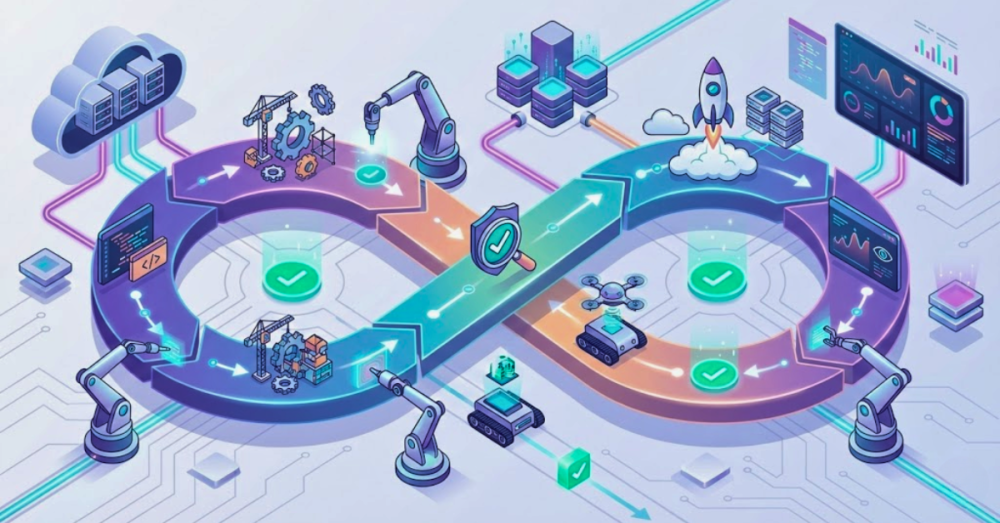
The Evolution from Gatekeeper to Catalyst: Why Continuous Testing Defines Modern Software Delivery
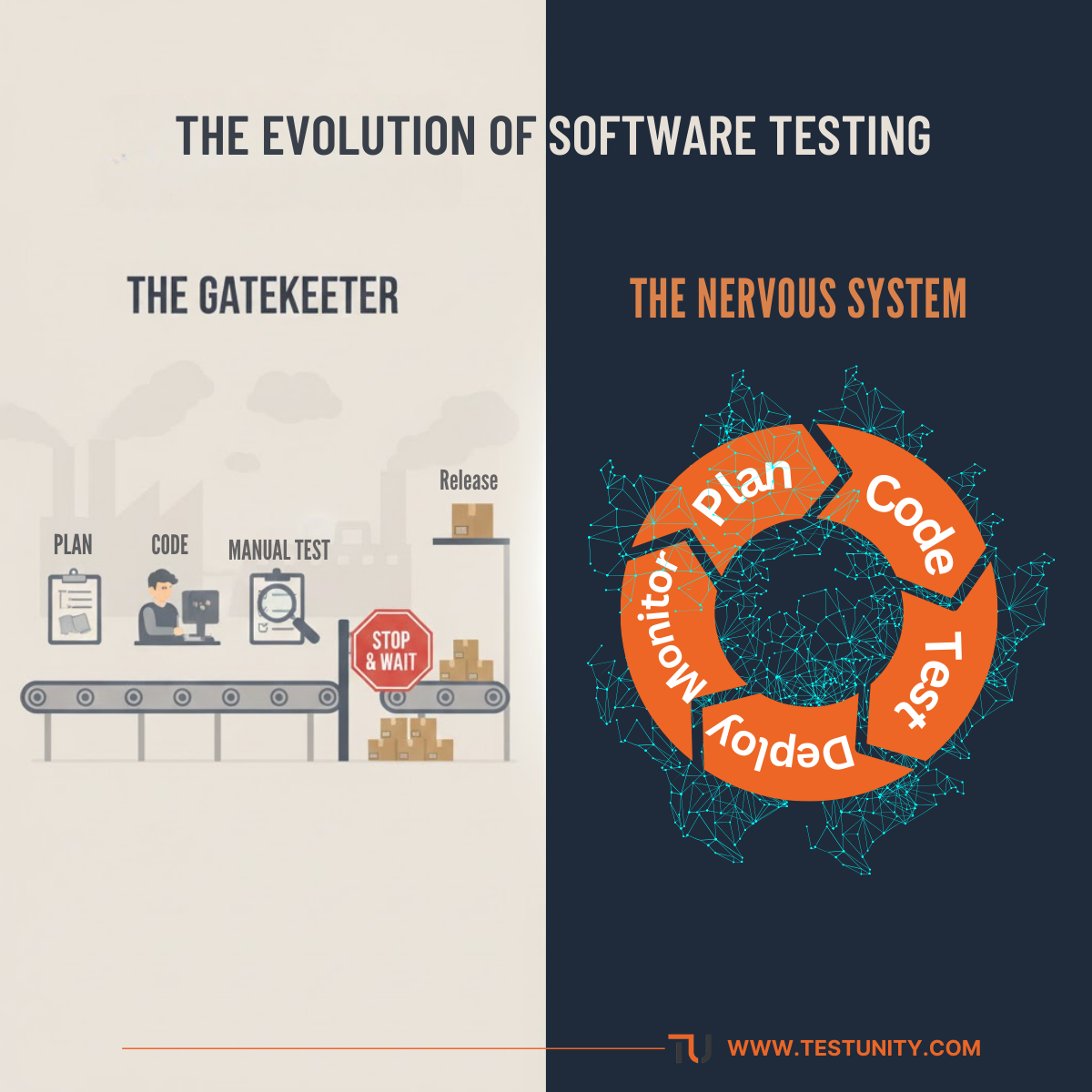
The fundamental shift in quality assurance: from a bottlenecking gatekeeper to an integrated nervous system that enables speed and confidence.
The software delivery landscape of 2026 is characterized by an uncompromising demand for speed, resilience, and user-centric innovation. In this environment, DevOps has matured from a novel methodology into the fundamental operating model for competitive organizations. However, the full potential of DevOps—the seamless, rapid, and reliable flow of value from code to customer—remains perpetually hamstrung by a critical, lingering question: “How can we be sure it’s safe to release?”
Traditional testing, often relegated to a final, manual gatekeeper role, is anathema to this flow. It creates a bottleneck where velocity stalls, feedback is delayed by weeks, and the business risk of any release becomes a looming, unknown variable. The paradigm that resolves this fundamental tension is continuous testing.
Continuous testing is not merely “automated testing” or “testing done quickly.” It is a fundamental cultural and technical discipline that repositions quality assurance as the integrated nervous system of the entire software delivery pipeline. It is the practice of automatically and perpetually assessing the business risk associated with a software release candidate at every single stage of the DevOps lifecycle. By providing instant, objective feedback on quality, it shifts the question from “Is testing done?” to “Based on the evidence, what is the quantifiable risk of proceeding?”
This transformation is not optional. Research from organizations like the DevOps Research and Assessment (DORA) team consistently correlates high-performing technology teams with comprehensive test automation and rapid feedback mechanisms. These elite performers deploy on demand, recover from failures in minutes, and enjoy significantly lower change failure rates. The thread connecting these outcomes is a mature, embedded practice of continuous testing. It is the catalyst that allows DevOps principles to manifest as tangible business results: faster time-to-market, reduced operational costs, improved customer satisfaction, and enhanced competitive agility.
Deconstructing the Pillars: The Architectural Components of a Continuous Testing Ecosystem
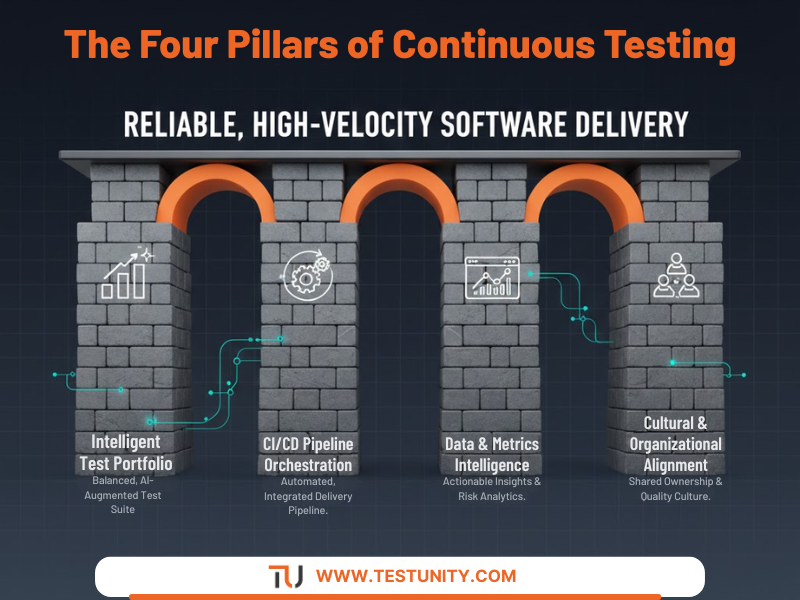
Continuous testing is not a single tool, but a holistic ecosystem. These four interdependent pillars form the foundation that supports reliable, high-speed software delivery in a modern DevOps environment.
Implementing continuous testing successfully requires moving beyond tool installation to architect a holistic ecosystem. This ecosystem rests on four interdependent pillars, each demanding strategic focus.
1. The Automation Foundation: A Balanced, Intelligent Test Portfolio
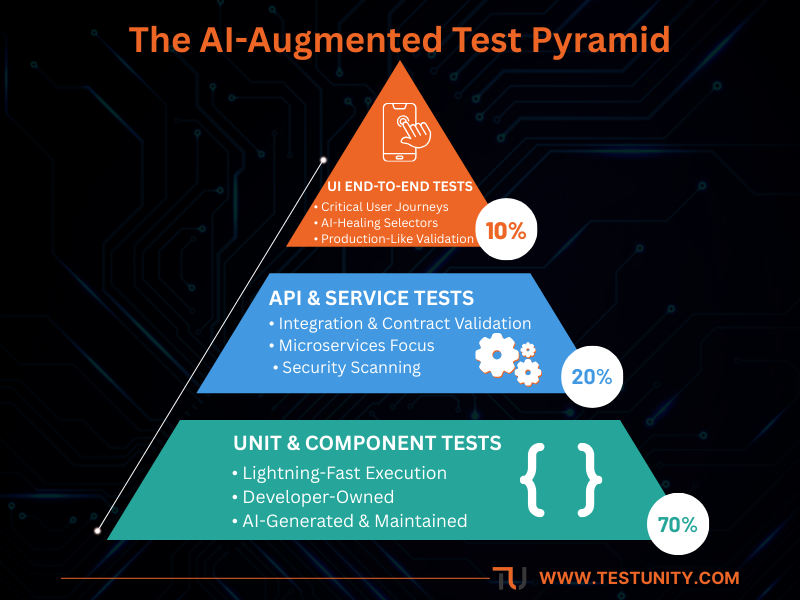
The Intelligent Test Portfolio Pyramid. This model prioritizes a large base of fast, automated unit tests, supported by integration tests, with a minimal layer of UI tests—all augmented by AI for generation and maintenance.
The core engine of continuous testing is a strategically designed suite of automated checks. The goal is to create a portfolio that maximizes feedback quality while minimizing execution time—a concept popularized as the Testing Pyramid.
-
The Foundational Layer: Unit & Component Tests: These are the vast majority (70-80%) of tests. They are written by developers, execute in milliseconds in memory, and validate the logic of individual functions or classes in isolation. Their speed and reliability make them perfect for instant feedback upon every code commit. In 2026, AI-assisted unit test generation tools are becoming standard, helping developers achieve high code coverage efficiently.
-
The Integration Layer: API & Service Tests: Comprising about 15-20% of the suite, these tests verify the contracts and interactions between modules, services, and external dependencies. With the dominance of microservices and cloud-native architectures, this layer is arguably the most critical for system reliability. Techniques like contract testing (using tools like Pact or Spring Cloud Contract) ensure that services can communicate reliably even when deployed independently. This layer is a primary focus for specialized API automation testing services.
-
The UI Layer: End-to-End (E2E) Tests: This should be the smallest layer (5-10%), consisting of high-value user journey simulations. Modern frameworks like Cypress, Playwright, and WebDriverIO offer greater stability and speed. The key is resilience; AI-powered self-healing capabilities are now essential, where machine learning models automatically update brittle element selectors when the UI changes, preventing test flakiness that erodes pipeline trust.
2. Pipeline Orchestration: The CI/CD Integration Imperative
Automated tests are inert without a mechanism to trigger them. Deep, native integration into the Continuous Integration and Continuous Delivery (CI/CD) pipeline is the circulatory system of continuous testing.
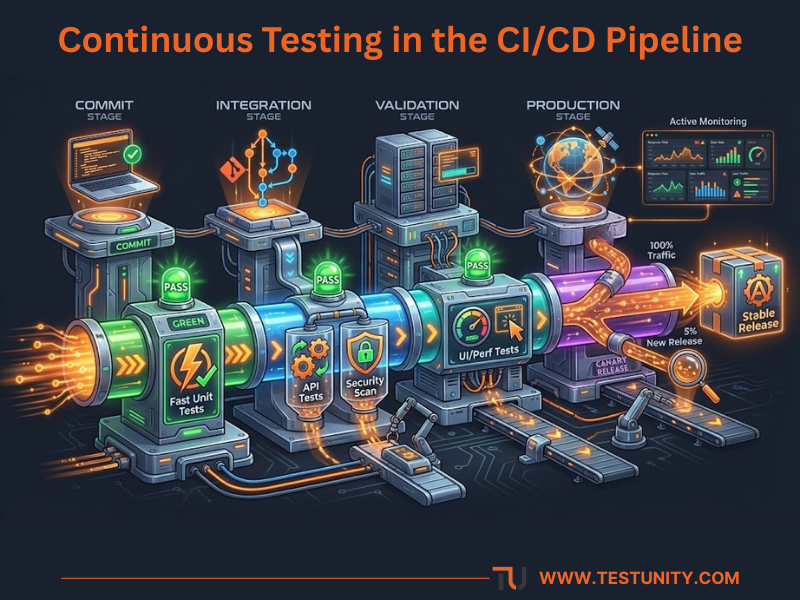
The Continuous Testing Pipeline. Automated tests are triggered at specific quality gates, providing immediate pass/fail feedback and enabling safe deployment practices like canary releases.
- Commit Stage: Triggered by a developer’s pull request or push, this stage runs the fastest tests—primarily static code analysis (SAST), linters, and the unit test suite. The goal is to provide feedback within 5-10 minutes, preventing broken code from entering the main branch. This is the purest form of “shift-left,” where quality is assessed at the point of creation.
- Integration Stage: Upon a successful merge to the main branch, the pipeline builds the application and deploys it to an integration environment. Here, the broader suite of API, integration, and security tests (DAST) are executed. This stage validates that components work together as intended.
- Validation Stage: Before promoting a build to a production-like staging environment, a more comprehensive battery runs. This includes critical UI E2E tests, performance baseline tests, and accessibility scans. The environment here should be a near-perfect replica of production to ensure validity.
- Production Stage (Shift-Right): Continuous testing extends into production. Techniques like canary releases and feature flagging allow for the gradual exposure of new features to a subset of users while automated health checks and real-user monitoring (RUM) provide immediate feedback on real-world performance and behavior.
3. Data & Metrics: The Intelligence Core
Continuous testing generates vast amounts of data. The strategic pillar involves transforming this data into actionable intelligence.
-
Pipeline Health Metrics:
-
Lead Time for Changes: How long does it take a commit to reach production? Continuous testing aims to reduce this by eliminating manual gates.
-
Deployment Frequency: How often can the organization reliably deploy? Robust testing enables higher frequency with lower risk.
-
Mean Time to Recovery (MTTR): When a defective change slips through, how quickly can it be detected and remediated? Fast test feedback is key.
-
-
Test Suite Quality Metrics:
-
Flakiness Rate: The percentage of tests that pass and fail non-deterministically. A high rate destroys trust in the pipeline. Target <1%.
-
Defect Escape Rate: The most critical metric. How many bugs are found in production versus pre-production? This measures the effectiveness of the entire testing strategy.
-
Test Execution Time & Parallelization Efficiency: Monitoring and optimizing the speed of the test suite is essential for developer productivity.
-
-
Business Risk Indicators: Advanced practices involve mapping test results to business features and user journeys, providing product owners and executives with a real-time “risk dashboard” for every release candidate.
4. Cultural & Organizational Alignment: The Human Factor
The most sophisticated technical implementation will fail without the corresponding cultural shift. Continuous testing necessitates a shared responsibility for quality.
-
From “QA’s Job” to “Everyone’s Job”: Developers are empowered and expected to write meaningful unit and integration tests. QA engineers evolve into Quality Coaches and Test Automation Architects, focusing on framework design, complex scenario testing, and upskilling the team.
-
Collaboration from Inception: Testing considerations are part of the initial design discussion (a “shift-left” of mindset). Techniques like Behavior-Driven Development (BDD), where requirements are written as executable specifications (e.g., using Gherkin syntax), ensure a shared understanding between product, development, and QA from the very beginning.
-
Blameless Post-Mortems: When defects escape, the focus shifts from assigning blame to analyzing the systemic reasons why the testing net failed and improving the process. This psychological safety is vital for innovation and learning.
Navigating the Implementation Labyrinth: A Phased Roadmap for 2026
Embarking on a continuous testing journey can be daunting. A pragmatic, phased approach is essential.
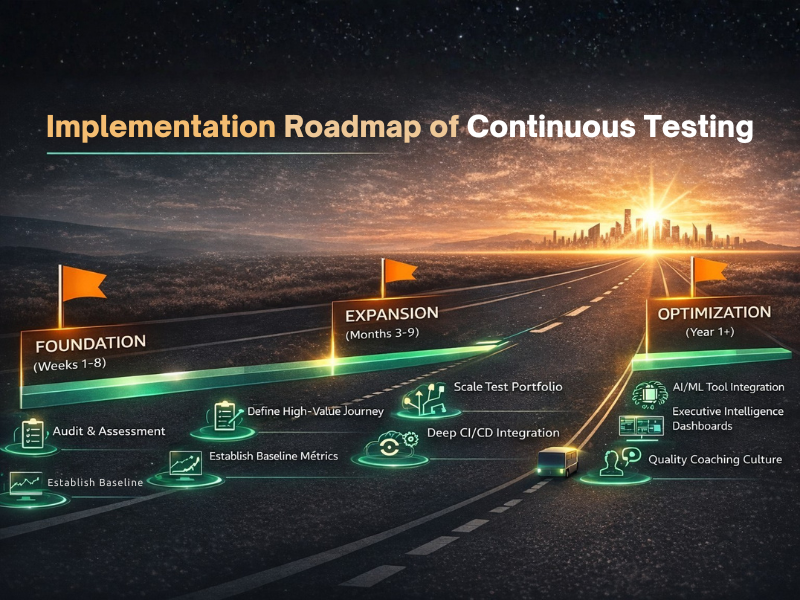
The Strategic Implementation Roadmap. A pragmatic, three-phase approach to adopting continuous testing, ensuring each stage builds a stable foundation for the next, from initial assessment to AI-powered optimization.
Phase 1: Assessment & Foundation (Weeks 1-8)
-
Conduct a Test Automation Audit: Objectively assess the current state—test coverage, flakiness, execution time, and integration level. Identify the single most critical, high-value user journey to target first.
-
Establish the “Fast Feedback” Core: Prioritize getting a reliable unit and API test suite for the core application logic integrated into the CI pipeline. This often involves establishing or refining a dedicated automation framework development effort to ensure scalability and maintainability.
-
Define Metrics & Baselines: Establish key metrics (escape rate, flakiness) and capture baseline measurements to demonstrate future improvement.
Phase 2: Expansion & Integration (Months 3-9)
-
Scale the Test Portfolio: Using the foundation from Phase 1, systematically expand automation to other critical business flows and integration points.
-
Deepen CI/CD Integration: Work with platform engineering or DevOps teams to fully automate the deployment to test environments and the execution of test suites across the pipeline stages. This is where expertise in CI/CD integration services proves invaluable.
-
Introduce Shift-Right Practices: Begin implementing basic production monitoring alerts tied to deployment events and explore simple canary release strategies.
Phase 3: Optimization & Intelligence (Year 1+)
-
Leverage AI & ML: Integrate tools for AI-based test generation, intelligent test selection (running only tests impacted by a code change), and predictive analytics for failure risk.
-
Refine the Feedback Loop: Create dashboards that make test intelligence visible and actionable for all stakeholders, from developers to CTOs.
-
Cultivate the Quality Engineering Culture: Formalize the role of Quality Coaches, celebrate improvements in quality metrics, and foster continuous learning through internal workshops and guilds.
The 2026 Toolchain: From Automation to Autonomy
The technology enabling continuous testing is rapidly evolving from execution tools towards intelligent, autonomous platforms.
-
AI-Augmented Testing Platforms: Tools like Applitools Eyes (for visual AI) and Functionize use machine learning for test creation, maintenance, and analysis, moving beyond scripted validation to understanding application behavior.
-
Intelligent Test Orchestration (ITO): Platforms like Launchable or Tricentis Neo analyze version control history and test results to predict which tests are necessary for a given change set, slashing unnecessary execution time and focusing efforts on risk.
-
Integrated Quality Platforms: Solutions such as Katalon Platform and Azure Test Plans offer all-in-one environments for test case management, automation, execution across clouds, and reporting, reducing toolchain fragmentation.
-
Observability-Driven Testing: The convergence of testing tools with application performance monitoring (APM) and log management (e.g., integrating with DataDog, New Relic) allows teams to create tests based on actual production traffic patterns and failure modes, ensuring tests reflect real-user experiences.
The Horizon: Continuous Testing as a Strategic Business Capability
As we look beyond 2026, continuous testing will cease to be viewed as a IT cost center and will be recognized as a core strategic capability for digital business resilience.
-
Predictive Quality Governance: Systems will not only assess current risk but will forecast the stability of future releases based on code complexity, team velocity, and historical defect data, enabling proactive resource allocation and timeline management.
-
Completely Autonomous Quality Gates: Release decisions will be increasingly informed—and eventually made—by AI systems that synthesize data from tests, performance metrics, security scans, and market conditions, optimizing for speed, stability, and business opportunity.
-
Continuous Compliance: In regulated industries, testing pipelines will automatically generate auditable evidence for standards like SOC2, GDPR, or HIPAA, turning compliance from a periodic burden into a continuous, automated byproduct of the development process.
Conclusion: Building Your Unbreakable Delivery Confidence
In the final analysis, continuous testing is the discipline that transforms DevOps from an aspirational set of principles into a reliable, high-performance engine for software delivery. It replaces anxiety with evidence, delays with instant feedback, and silos with shared ownership. It is the essential practice that allows organizations to achieve the holy grail: moving fast without breaking things.
Building this capability is a significant undertaking—a blend of technical precision, process redesign, and cultural evolution. It requires not just tools, but a clear strategy and often, expert guidance.
This is the core of TestUnity’s mission. We partner with organizations to architect and implement their continuous testing backbone. From conducting initial test automation audits and building robust, scalable automation frameworks, to providing expert-led test automation services and seamless CI/CD integration, we provide the expertise and execution to embed quality at the velocity your business demands.
Is your testing strategy a gatekeeper or a catalyst? Contact TestUnity today for a comprehensive assessment. Let’s build the continuous testing nervous system that will power your confidence and competitiveness through 2026 and into the future.

TestUnity is a leading software testing company dedicated to delivering exceptional quality assurance services to businesses worldwide. With a focus on innovation and excellence, we specialize in functional, automation, performance, and cybersecurity testing. Our expertise spans across industries, ensuring your applications are secure, reliable, and user-friendly. At TestUnity, we leverage the latest tools and methodologies, including AI-driven testing and accessibility compliance, to help you achieve seamless software delivery. Partner with us to stay ahead in the dynamic world of technology with tailored QA solutions.









I really appreciate how this post frames continuous testing as an organizational capability rather than just a tooling upgrade. The emphasis on balancing intelligent automation with cultural alignment feels especially relevant—most teams underestimate how much the ‘human factor’ determines whether their pipelines actually deliver reliable speed. It would be interesting to explore how teams can evolve their test portfolios incrementally without overwhelming existing workflows.
Thanks for your feedback! We agree that continuous testing is an organizational capability and that the human factor is crucial. Evolving test portfolios incrementally helps teams adapt smoothly. What strategies have you found effective in balancing automation with culture?
It’s interesting to see how continuous testing is moving beyond just a gatekeeper role; the emphasis on user-centric innovation in 2026 is definitely key. I found some related insights on https://tinyfun.io/game/jewelry-match-puzzle-game that further highlighted the importance of rapid feedback loops.
we have approved this comment to tell evryone doing SEO for their sites that you should not do blog commenting on blogs unrelated to your domains like this fellow commenting on Software Testing Site for their gaming site. it really gives no value to yoour SEO and your efforts will simply go in vain.
Its like you read my mind! You appear to know a lot about this, like you wrote the book in it or something. I think that you can do with a few pics to drive the message home a little bit, but other than that, this is great blog. A fantastic read. I’ll definitely be back.
Thank you for your thoughtful feedback! We’re glad you found the content resonant. We appreciate your suggestion about adding pictures, and we’ll definitely consider it for future posts. Looking forward to having you back for more! 😊
The shift from testing as a gatekeeper to a catalyst in DevOps really resonates with what we’re seeing in practice—organizations that embrace continuous testing early on are those able to move fast without sacrificing quality. It’s not just about automation, but about embedding test intelligence into the CI/CD pipeline and aligning teams around shared responsibility for delivery confidence. The 2026 roadmap highlights a critical evolution: testing as a strategic enabler rather than a reactive check.
Thank you for sharing your thoughts! We completely agree that the shift from testing as a gatekeeper to a catalyst in DevOps is crucial for organizations striving for speed and quality. Continuous testing and embedding test intelligence into the CI/CD pipeline are game changers. It’s inspiring to see teams embracing shared responsibility for delivery confidence. The evolution you mentioned in the 2026 roadmap truly highlights the strategic role of testing. We appreciate your insights and look forward to more discussions on this topic!