

Imagine launching a software project without a roadmap. Testing becomes chaotic, coverage is inconsistent, and defects slip through the cracks. This is the reality for teams without a clear test strategy.
In today’s fast-paced development world, where 56% of organizations now align their testing strategies directly with business objectives, a well-defined test strategy is no longer a “nice-to-have”—it’s the cornerstone of efficient, effective quality assurance . It’s the difference between reactive bug hunting and proactive quality engineering.
This comprehensive guide will explain exactly what a test strategy is, why it’s vital for your business, and how to build one. Plus, we provide a practical template to get you started today.
What is a Test Strategy?
A test strategy is a high-level document that defines the overall approach, objectives, and principles for software testing across an organization or for a specific project . Think of it as the blueprint for your testing efforts. It answers the fundamental questions of “what” we are trying to achieve and “why” we are testing in a particular way.
It sets the direction by outlining the testing goals, the methodologies to be used (like Agile or Shift-Left), the types of testing required (functional, performance, security), the tools and environments needed, and the metrics for measuring success . A robust test strategy ensures that every tester, developer, and stakeholder is aligned on the same quality vision.
Test Strategy vs. Test Plan: Understanding the Key Difference
One of the most common points of confusion in QA is the difference between a test strategy and a test plan. While they work together, they serve very different purposes .
| Aspect | Test Strategy | Test Plan |
|---|---|---|
| Definition | A high-level guide defining the approach and principles of testing. | A detailed document outlining the execution specifics for a project. |
| Focus | The “WHAT” and “WHY” of testing (vision, objectives, methods). | The “HOW,” “WHEN,” and “WHO” of testing (schedule, tasks, resources). |
| Scope | Organization-wide or applicable to multiple projects. | Specific to a single project, release, or iteration. |
| Level | Strategic and conceptual. | Tactical and detailed. |
| Creator | QA Manager / Test Manager / Leadership. | Test Lead / QA Engineer. |
| Stability | Relatively stable and changes infrequently. | Dynamic, updated as the project evolves. |
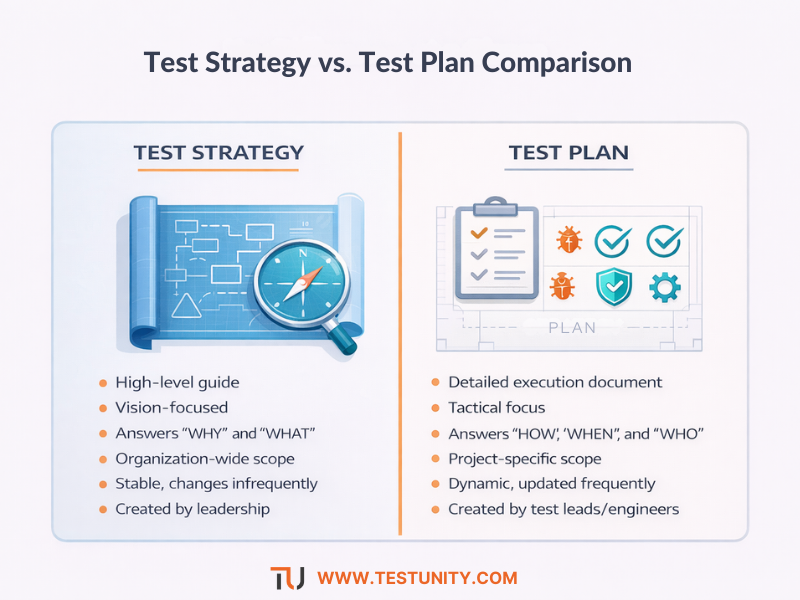
In short, the test strategy provides the master plan for the war, while the test plan is the detailed battle plan for a specific campaign .
Why is a Test Strategy Crucial for Business Success?
Investing time in creating a test strategy delivers tangible benefits that go far beyond simply finding bugs .
-
Aligns Testing with Business Goals: It ensures that testing efforts directly support business objectives, such as improving customer satisfaction, ensuring regulatory compliance, or protecting brand reputation.
-
Proactive Risk Mitigation: By identifying potential risks (e.g., performance bottlenecks, security vulnerabilities) early, a strategy allows you to plan mitigation tactics before they become costly production incidents.
-
Optimizes Resource Allocation: It defines the necessary tools, environments, and skill sets, ensuring you allocate your budget and team resources efficiently and avoid waste.
-
Ensures Consistency and Standardization: A shared strategy means every project follows the same core principles, leading to predictable, repeatable, and reliable testing outcomes across the organization.
-
Improves Stakeholder Communication: It serves as a communication tool that aligns developers, testers, product managers, and executives on the testing vision, scope, and approach.
Key Components of a Powerful Test Strategy Document
An effective test strategy document is more than just a formality; it’s an actionable framework. Here are the essential components it must include .
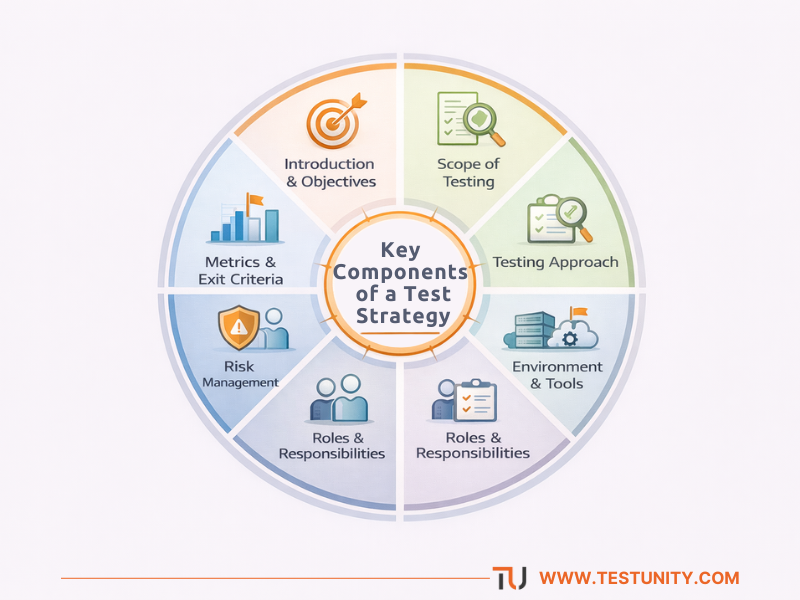
1. Introduction and Objectives
Start by defining the “why.” What are the primary goals of your testing efforts? Are you aiming for zero critical defects, a specific user experience benchmark, or 100% compliance with a standard? This section sets the tone and ensures everyone understands the purpose.
2. Scope of Testing
Clearly define the boundaries. What features, modules, or systems are in scope and will be tested? More importantly, what is out of scope? Defining this prevents scope creep and focuses the team’s energy on the most critical areas.
3. Testing Approach and Methodologies
This is the core of your strategy. Describe the high-level approach. Will you follow a risk-based testing approach, focusing efforts on the most critical functionalities? Will you adopt a Shift-Left strategy to test earlier in the development lifecycle? Define the key methodologies, such as Agile, DevOps, or Waterfall, that will guide the process.
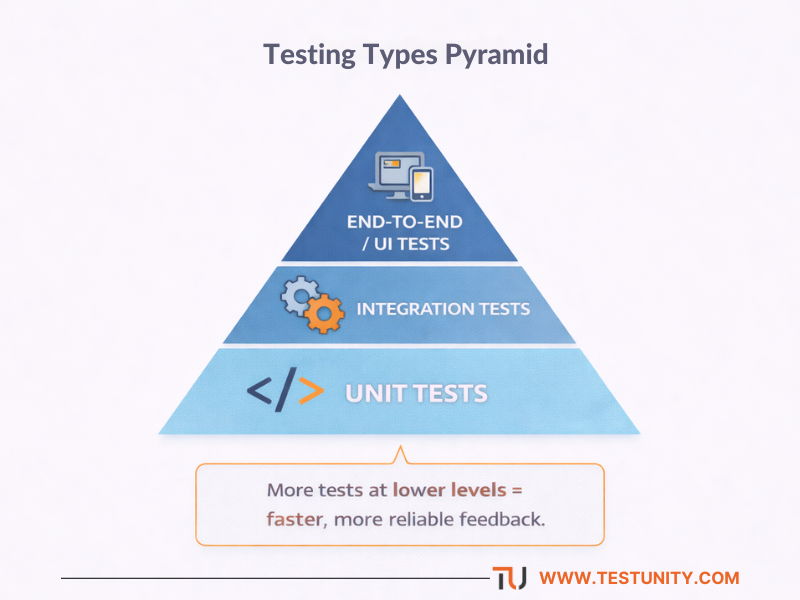
4. Testing Types and Levels
Detail the specific types of testing you will employ to ensure comprehensive coverage. This should be organized by level (like the Test Pyramid ) and type.
-
Functional Testing: Unit, Integration, System, Acceptance (UAT), Smoke, Sanity, Regression.
-
Non-Functional Testing: Performance (Load, Stress), Security, Usability, Accessibility, Compatibility.
By specifying these, you ensure that all quality dimensions are addressed. For a deeper dive into these categories, our Software Testing Types: Ultimate Cheat Sheet is an excellent companion resource.
5. Test Environment and Tools
List the required infrastructure. What hardware, software, network configurations, and test data are needed? Crucially, this section should also specify the test automation frameworks, management tools (like Jira or TestRail), and other utilities that will standardize the work.
6. Roles and Responsibilities
Clarity is key. Define who is responsible for each part of the strategy. Who defines the approach? Who is responsible for test automation architecture? Who manages the test environments? This prevents confusion and ensures accountability.
7. Risk Management and Mitigation
A mature strategy acknowledges that things can go wrong. List the potential risks—such as tight deadlines, unstable requirements, or limited access to environments—and outline a clear mitigation plan for each. This proactive stance is a hallmark of a continuous testing mindset, which you can explore in our guide on Continuous Testing: The Backbone of Modern DevOps .
8. Metrics and Exit Criteria
How will you measure success and know when you’re done? Define key performance indicators (KPIs) like test coverage, defect density, and test execution progress. Establish entry criteria (when to start a test phase) and exit criteria (what must be achieved to consider testing complete). This data-driven approach provides transparency and proves the value of your QA efforts.
How to Create Your Test Strategy: A Step-by-Step Guide
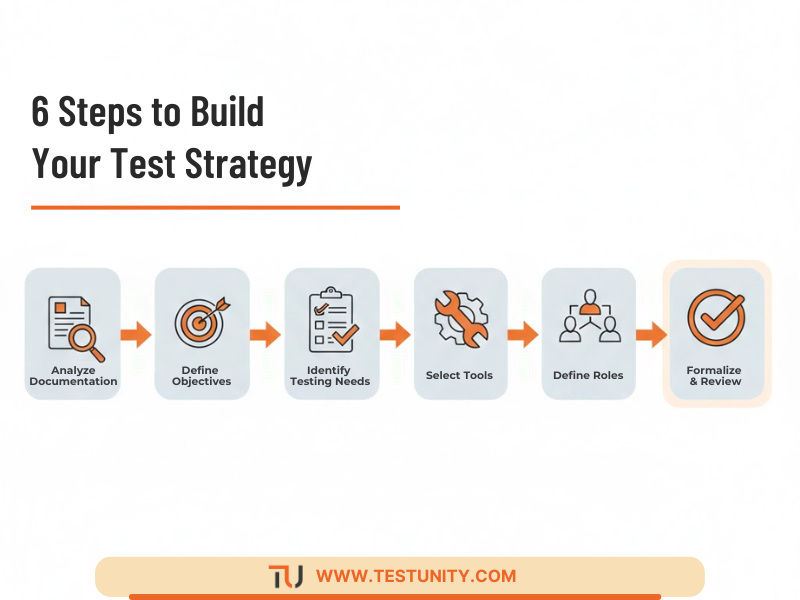
Creating a test strategy doesn’t have to be overwhelming. Follow these practical steps to build a document that drives real results .
-
Step 1: Analyze Project Documentation: Begin by thoroughly reviewing all available project materials: requirement documents, user stories, architecture diagrams, and wireframes. This gives you the foundational knowledge you need.
-
Step 2: Define Clear, Measurable Objectives: Work with product managers and key stakeholders to define what “quality” means for this product. Set specific, measurable goals (e.g., “Achieve 95% test coverage for all critical user journeys”).
-
Step 3: Identify the Core Testing Needs: Based on your analysis, determine which testing types are most critical. Is this a data-intensive application requiring heavy performance testing? Is it a public-facing site where accessibility testing is a must?
-
Step 4: Select the Right Tools and Frameworks: Evaluate and choose the tools that best fit your identified needs, team skills, and budget. This includes automation frameworks, performance testing tools, and test management platforms.
-
Step 5: Define Roles and Responsibilities: Clearly outline who is on the testing team and what each person owns. Get buy-in from these individuals to ensure commitment.
-
Step 6: Formalize and Review: Write the strategy in a clear, structured document. Share it with all stakeholders—developers, project managers, business analysts—for feedback and formal sign-off. This ensures everyone is aligned from the start.
Sample Test Strategy Document Template
Use this simplified template as a starting point for your own strategy.
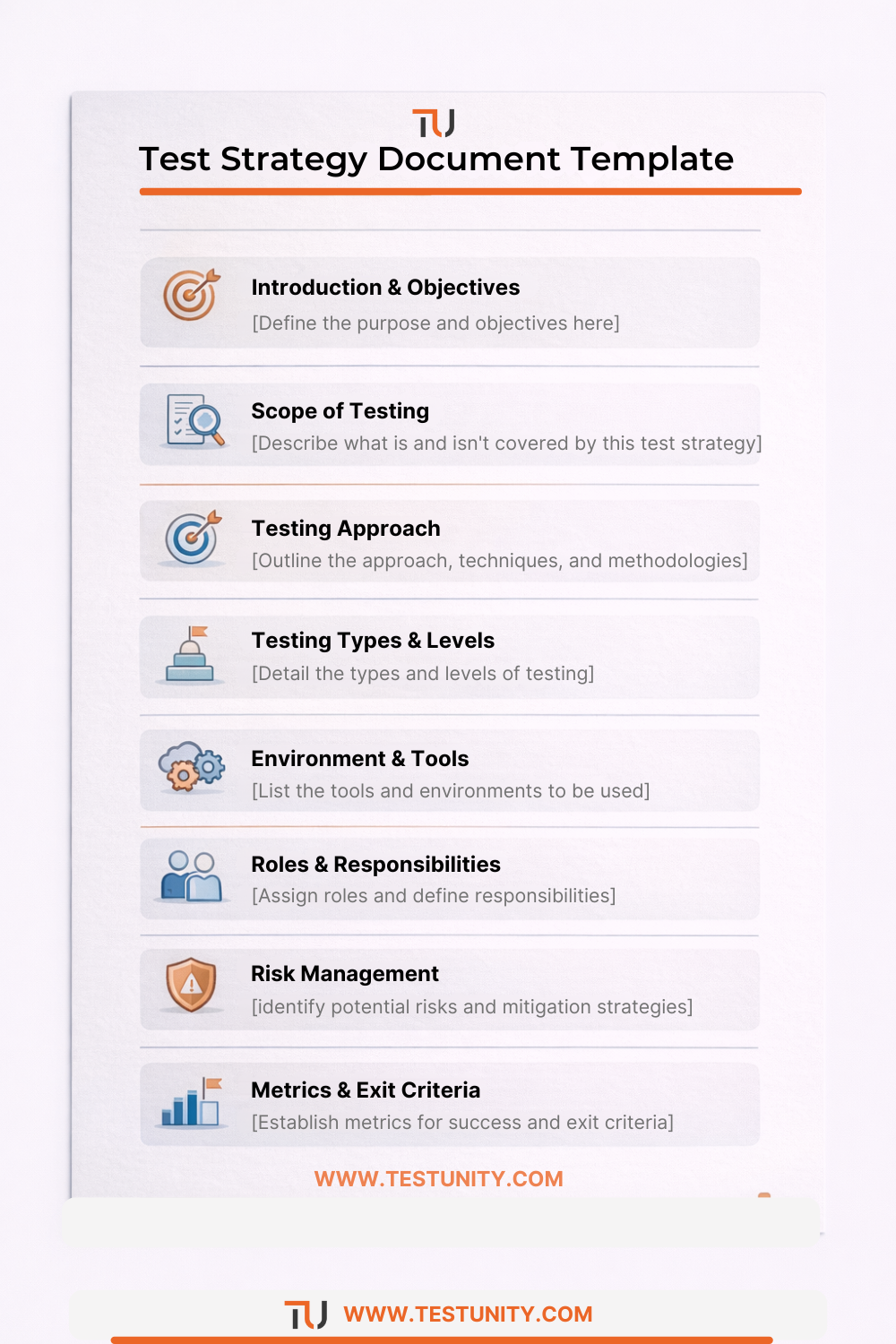
[Project Name] Test Strategy
Version: 1.0
Date: [Date]
Author: [Name/Role]
1. Introduction
-
Purpose: Define the overarching testing approach for [Project Name] to ensure delivery of a high-quality product that meets business objectives.
-
Objectives:
-
Validate all functional requirements as defined in the PRD.
-
Ensure the application performs reliably under expected peak load.
-
Identify and mitigate critical security vulnerabilities prior to launch.
-
2. Testing Scope
-
In Scope: Core user journeys (e.g., login, search, checkout), Admin panel, REST APIs.
-
Out of Scope: Third-party integrations (tested by vendor), legacy reporting module.
3. Testing Approach
-
Methodology: Agile/Scrum with testing integrated into each sprint.
-
Strategy: Risk-based testing, prioritizing features with the highest business impact and complexity. “Shift-Left” approach to involve testers in the requirement refinement phase.
4. Testing Types & Levels
-
Unit Testing: Developers (JUnit, pytest). Must be run and pass before code merge.
-
Integration Testing: QA Team (Postman, RestAssured). Focus on API contracts and data flow between services.
-
System/E2E Testing: QA Team (Cypress, Selenium). Cover all critical user paths.
-
Performance Testing: QA Team (k6, JMeter). Load and stress tests in staging.
-
Acceptance Testing (UAT): Product Owners & Business Users.
5. Tools & Environment
-
Test Management: Jira / Xray
-
Automation: Cypress, Postman
-
Performance: k6
-
Environment: A dedicated staging environment mirroring production configuration.
6. Roles & Responsibilities
-
QA Manager: Owns the overall strategy and resource planning.
-
Test Lead: Defines test plans, coordinates execution, and reports progress.
-
QA Engineers: Design test cases, execute tests, report defects, and maintain automation scripts.
-
Developers: Write and maintain unit tests, support QA in defect analysis.
7. Risks & Mitigation
-
Risk: Limited access to staging environment may delay testing.
-
Mitigation: Schedule testing windows in advance; explore using on-demand cloud environments for specific tests.
-
-
Risk: Third-party API instability.
-
Mitigation: Implement mocking/service virtualization for testing to decouple from external dependencies.
-
8. Metrics & Exit Criteria
-
Metrics: Test Case Pass %, Defect Density, Automation Coverage %, Average Time to Repair.
-
Entry Criteria (for System Test): All unit and integration tests pass; code is deployed to a stable staging environment.
-
Exit Criteria (for Release): No Critical or High defects open; 100% of critical path test cases passed; performance benchmarks met.
Conclusion: Your Roadmap to Quality Starts Here
A test strategy is your organization’s commitment to quality. It transforms testing from an unpredictable, last-minute activity into a structured, strategic process that delivers better software, faster. It reduces risk, optimizes costs, and ensures everyone is working toward the same quality goals.
Building this strategy is the first and most critical step. The next is executing it with precision. At TestUnity, we specialize in helping businesses like yours design and implement robust testing strategies, from defining the initial approach to executing complex test automation. Our Test Automation Services are designed to turn your strategic vision into a reality.
Ready to build a testing framework that delivers results? Contact TestUnity today to discuss your QA strategy and discover how we can help you achieve unparalleled software quality.
Also read our detailed blog: Complete Guide to Types of Software Testing, Levels & Methods

TestUnity is a leading software testing company dedicated to delivering exceptional quality assurance services to businesses worldwide. With a focus on innovation and excellence, we specialize in functional, automation, performance, and cybersecurity testing. Our expertise spans across industries, ensuring your applications are secure, reliable, and user-friendly. At TestUnity, we leverage the latest tools and methodologies, including AI-driven testing and accessibility compliance, to help you achieve seamless software delivery. Partner with us to stay ahead in the dynamic world of technology with tailored QA solutions.









I blog frequently and I genuinely thank you for your
content. This great article has truly peaked my interest.
I will book mark your blog and keep checking for new
information about once a week. I subscribed to
your RSS feed as well.
My homepage :: bclub cc