
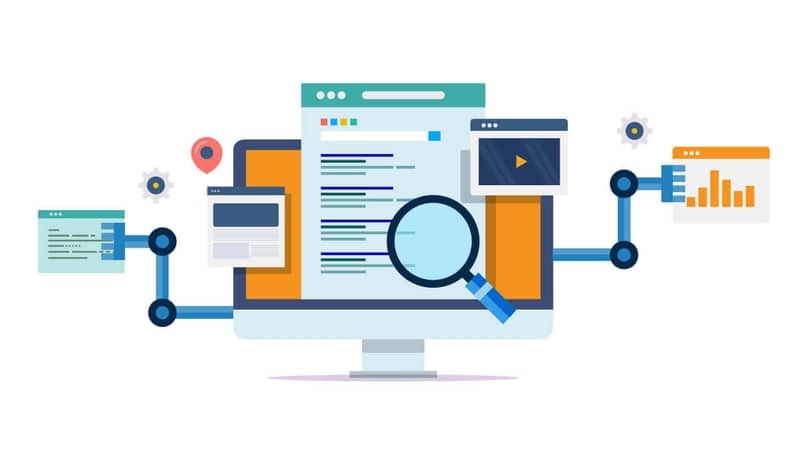
In the fast-paced world of software delivery, selecting the right website test automation tool is one of the most consequential decisions an engineering organization can make. This choice transcends a simple feature comparison; it’s a strategic commitment that shapes your team’s velocity, your product’s quality, and your ability to innovate with confidence. With a landscape continuously evolving—where established frameworks now coexist with intelligent, AI-augmented platforms—navigating the options requires a clear, principled approach. This guide provides a durable, strategic framework to help you evaluate and select a website test automation tool that aligns with your unique context and scales with your ambitions.
A modern website test automation tool is more than a script recorder; it is the core engine of your quality assurance pipeline. The optimal choice empowers teams, shortens feedback loops, and builds a foundation for reliable releases. A poor fit, however, leads to fragile tests, unsustainable maintenance costs, and a bottleneck that stifles progress. Let’s move beyond transient trends and examine how to match a tool’s philosophy and capabilities to your team’s DNA, your technology stack, and the principles of modern software delivery.
The Strategic Evaluation Framework: Five Dimensions for Decision-Making
Before analyzing specific tools, establish your evaluation criteria based on these five strategic dimensions. The ideal website test automation tool must be a strong fit across this spectrum.
1. Team Composition and Core Competency
The tool must complement, not conflict with, your team’s skills. Misalignment here is the primary cause of automation initiative failure.
- Developer-Centric Teams: Require tools with deep IDE integration, clean APIs, and support for familiar programming languages. They prioritize flexibility, control, and the ability to treat test code with the same rigor as production code.
- QA and SDET Teams: Need robust reporting, extensive cross-browser/device capabilities, and seamless integration with test management systems. They value comprehensive coverage, reliability, and detailed diagnostics.
- Low-Code and Cross-Functional Teams: Benefit significantly from intuitive interfaces, visual test designers, and features like AI-assisted maintenance that lower the technical barrier to entry and foster collaboration between technical and domain experts.
2. Application Architecture and Technological Foundation
Your tool must be capable of interacting effectively with your application’s structure.
- Modern Single-Page Applications (SPAs): Require intelligent automatic waiting, support for testing individual components (React, Vue, Angular), and handling of complex client-side state.
- Traditional or Legacy Web Applications: Need reliable handling of iframes, file uploads, non-standard controls, and may benefit from strong record-and-playback capabilities.
- Cross-Platform and Mobile Web: Demand robust emulation, integration with device clouds (like BrowserStack, Sauce Labs), and specific strategies for cross-browser and cross-device testing to ensure a consistent user experience.
3. DevOps and Toolchain Integration Maturity
Automation cannot be an island. The tool must be a seamless component of your continuous delivery ecosystem.
- CI/CD Pipeline Integration: Native support for GitHub Actions, GitLab CI, Jenkins, CircleCI, and Azure DevOps is non-negotiable for enabling continuous testing in DevOps and providing fast feedback on every change.
- Shift-Left and Shift-Right: Can tests be run efficiently by developers locally (shift-left) and also be incorporated into production monitoring or canary release strategies (shift-right)?
- Ecosystem Compatibility: Does it integrate with your project management (Jira), communication (Slack, Teams), and observability platforms to create a unified workflow?
4. Total Cost of Ownership and Long-Term Scalability
The initial download or license fee is a small fraction of the true cost.
- Development and Maintenance Velocity: How quickly can a team member create a stable, reusable test? More importantly, what is the ongoing effort to maintain those tests against a changing UI? Tools with features like self-healing locators directly address this major cost center.
- Execution Infrastructure and Management: Does the tool require you to build and manage complex, self-hosted grid infrastructure (e.g., Selenium Grid), or does it offer a managed, scalable cloud execution environment?
- Learning Curve and Community Support: What is the investment required for team onboarding? A vibrant, active community and comprehensive documentation are invaluable assets that reduce long-term TCO.
5. Innovation Trajectory and Future-Readiness
Select a tool that is evolving, not just maintained. Consider its direction and how it embraces new paradigms.
- Adoption of AI/ML: Is the tool exploring intelligent features such as visual validation, flakiness prediction, automatic test generation, or smart test maintenance? This is a key differentiator for modern platforms.
- Community Health and Vendor Vision: For open-source tools, is the community active and growing? For commercial vendors, does their public roadmap demonstrate alignment with broader industry shifts toward developer experience and increased automation intelligence?
- Standards Compliance and Flexibility: Does the tool embrace or interoperate with web standards (like WebDriver), ensuring it won’t become an isolated silo?
The Modern Toolscape: A Comparative Analysis
Here is an analysis of the leading contenders, categorized by their defining strategic value proposition.
1. Selenium WebDriver: The Universal Protocol
The foundational open standard for browser automation. It is a specification and an API, not a single tool, forming the backbone for countless frameworks.
- Strategic Value: Unmatched flexibility, control, and freedom from vendor lock-in. Its W3C standardization guarantees long-term relevance and deep, community-driven integration possibilities. It is the ultimate “build-your-own” foundation.
- Key Considerations: Realizing its value requires significant in-house expertise to architect a robust framework. Teams must diligently implement design patterns like the Page Object Model (POM) and manage their own infrastructure to ensure stability and combat flakiness.
- Ideal For: Organizations with mature SDET or developer-led QA teams who require maximum control, need to support a vast array of technologies (old and new), and are willing to invest in building a custom-tailored automation ecosystem.
2. Playwright: The Modern Framework for Reliability
A relatively new but rapidly adopted framework from Microsoft, built for the modern web with a focus on stability and speed.
- Strategic Value: Engineered from the ground up to eliminate flakiness. Its architecture uses auto-waits and a broader context for browsers, making tests remarkably stable. Native support for browser contexts, network interception, and mobile device emulation makes it powerful for testing complex, stateful user journeys.
- Key Considerations: While multi-language support (JS/TS, Python, C#, Java) is strong, its ecosystem, while growing explosively, has less legacy depth than Selenium’s decades-long head start.
- Ideal For: Development and QA teams building modern web applications who prioritize test reliability and developer productivity. It’s an excellent choice for teams implementing a rigorous test automation strategy who want a powerful, out-of-the-box framework. For a deeper technical comparison, see our analysis of Playwright, Cypress, and Selenium.
3. Cypress: The Architect of Developer Experience
Cypress took a radical approach by executing in the same run-loop as the application, creating a uniquely interactive and debuggable environment.
- Strategic Value: Unparalleled developer experience (DX). Features like real-time reloading, time-travel debugging, and automatic waiting make writing, debugging, and understanding tests intuitive. It strongly champions the shift-left testing methodology by being incredibly developer-friendly.
- Key Considerations: Its unique architecture brings both benefits and constraints. It operates within a different model than traditional proxy-based tools, which can be limiting for specific advanced use cases like testing across multiple domains or tabs in a single test.
- Ideal For: Front-end heavy teams and organizations where developer productivity and test-driven development (TDD) are top cultural priorities, and the application’s testing needs fit comfortably within Cypress’s execution model.
4. AI-Augmented and Commercial Platforms
This category includes tools like Katalon Studio, Testim, Functionize, and others that blend scripting, low-code interfaces, and built-in intelligence.
- Strategic Value: Accelerating test creation and radically reducing maintenance burden. Core value propositions include AI-powered self-healing locators, codeless test recording, smart element selection, and automated test generation from user flows or requirements.
- Key Considerations: Can introduce a form of vendor lock-in and may offer less programmatic flexibility for highly unique or technically complex scenarios compared to open-source frameworks. Pricing models based on users, test runs, or features can scale in cost.
- Ideal For: Teams with diverse skill sets seeking to scale automation quickly, organizations without a large dedicated SDET function, or those looking for an integrated solution that may also include modules for API automation testing services and mobile testing.
| Evaluation Dimension | Selenium | Playwright | Cypress | AI-Augmented Platforms |
|---|---|---|---|---|
| Primary Strength | Flexibility & Control | Reliability & Modern Features | Developer Experience | Acceleration & Maintenance |
| Skill Requirement | High (SDET/Dev) | Medium-High (Dev/QA) | Medium (Front-end Dev) | Low-Medium (Mixed Teams) |
| Ideal Architecture | Any (Complex/Mixed) | Modern SPAs, Micro-frontends | Modern SPAs (within model) | Broad (Web, Mobile, API) |
| TCO Profile | High (Infrastructure/Expertise) | Medium (Lower Maintenance) | Medium (Productivity Gains) | Variable (License vs. Speed) |
| Innovation Focus | Foundational Standard | Performance & Stability | Developer Experience & DX | AI-Driven Automation |
Your Strategic Selection Action Plan
- Convene a Cross-Functional Evaluation Team: Include representation from development, QA/Testing, and DevOps/Platform Engineering. Diverse perspectives prevent technical myopia and ensure the tool supports the entire software delivery lifecycle.
- Define and Prioritize Your Criteria: Use the five-dimension framework to create a weighted scorecard. Is seamless CI/CD integration an absolute must-have? Is robust mobile web testing a critical future requirement? Rank these needs.
- Conduct a Focused, Hands-On Proof of Concept (PoC): Select your top 2-3 candidates. Challenge each team to use the tool to automate the same set of 3-5 critical user journeys on your actual application. Measure objectively: time to create a working test, execution speed and consistency (run it multiple times), clarity of failure reports, and ease of debugging.
- Launch a Lighthouse Pilot Project: Implement the selected tool on a single, well-scoped project or within one product team. Use this pilot to develop internal best practices, training materials, and process integrations in a controlled environment before attempting organization-wide rollout.
- Institutionalize Review and Evolution: Treat your automation tooling as a strategic asset that should be periodically reviewed. Schedule bi-annual or annual assessments to ensure your chosen solution continues to meet evolving team needs, application changes, and industry advancements.
Conclusion: Building a Foundation for Sustainable Quality
Choosing a website test automation tool is a strategic decision with profound and lasting implications. It is not about finding the universally “best” tool, but about identifying the right strategic partner for your organization’s unique context, culture, and challenges. By grounding your decision in a structured, multi-dimensional evaluation framework and validating it through hands-on proof of concept, you invest in a foundation that enables speed, quality, and confidence.
The most successful organizations view their automation tools as a living, integrated component of their engineering ecosystem—one that evolves from supporting agile automation testing practices to enabling full continuous delivery. The right tool should disappear into the workflow, empowering your team to build and validate software with the assurance that every release, regardless of frequency, delivers a reliable and valuable experience to your users.
Ready to build a sustainable, high-ROI test automation strategy but need expert guidance to navigate the complexity? TestUnity’s specialists can help you through this critical decision. We offer test automation audit services, strategic tool selection consulting, and hands-on automation framework development to ensure your investment delivers maximum velocity and quality.
Contact us today for a consultation and let’s build an automation foundation that scales with your success.

TestUnity is a leading software testing company dedicated to delivering exceptional quality assurance services to businesses worldwide. With a focus on innovation and excellence, we specialize in functional, automation, performance, and cybersecurity testing. Our expertise spans across industries, ensuring your applications are secure, reliable, and user-friendly. At TestUnity, we leverage the latest tools and methodologies, including AI-driven testing and accessibility compliance, to help you achieve seamless software delivery. Partner with us to stay ahead in the dynamic world of technology with tailored QA solutions.








Leave a Reply