
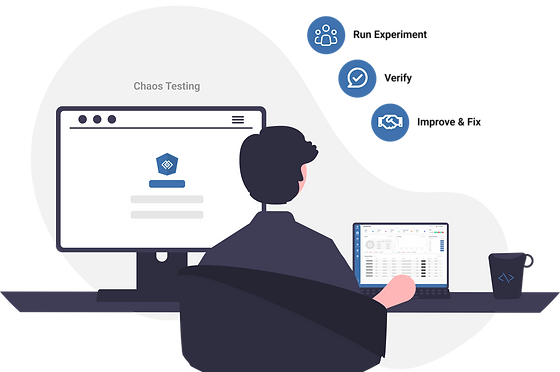
In an increasingly digital-dependent world, system failures are not a matter of “if” but “when.” The complexity of modern, distributed architectures—especially in the cloud—introduces countless potential points of failure that traditional testing often misses. Chaos testing, also known as chaos engineering, has emerged as the definitive methodology for proactively building software that can withstand the unpredictable. Think of it not as a test to find bugs, but as a controlled experiment to inoculate your system against future failures, much like a vaccine trains the immune system. This guide delves into the principles, practices, and profound benefits of chaos testing, providing a roadmap for engineering teams to move from reactive firefighting to confident, proactive resilience.
Moving beyond the hope that systems will simply “work,” chaos testing embraces the reality that components will fail. By deliberately injecting controlled, real-world failures into a production or production-like environment, teams can empirically discover systemic weaknesses before they cause customer-impacting outages. This shift from passive validation to active fault-seeking is what separates modern, high-availability platforms from fragile applications. It’s a core practice for any organization serious about delivering on the promise of reliability in a cloud-based, microservices-driven world.
Beyond Hope: The Core Philosophy of Chaos Testing
At its heart, chaos testing is a disciplined approach to uncovering the unknown-unknowns—the hidden, systemic flaws that only surface under specific, often rare, conditions. Traditional testing validates that the system works correctly under expected scenarios. Chaos engineering asks a more critical question: “Does the system gracefully degrade and recover when things go wrong?”
This philosophy is built on a simple, scientific method:
- Define a “Steady State”: Establish a measurable output that indicates your system is healthy (e.g., low latency, high throughput, zero error rates).
- Form a Hypothesis: Predict how the system will behave when a specific component fails (e.g., “If Database Node B fails, traffic will automatically reroute to Node A with less than a 5% increase in latency”).
- Inject Real-World Chaos: Introduce a controlled failure that mimics real events—a server crash, network latency spike, dependency failure, or region outage.
- Observe and Analyze: Measure the impact against your steady state. Did the system behave as hypothesized, or did a hidden, cascading failure emerge?
- Learn and Improve: Use the findings to fortify the system—improving redundancy, retry logic, circuit breakers, or disaster recovery plans.
Chaos Testing vs. Traditional Testing: A Paradigm Shift
Understanding how chaos testing differs from conventional methods is key to appreciating its unique value. It’s not a replacement but a vital complement to your existing types of software testing.
| Aspect | Traditional Testing (Functional, Performance) | Chaos Testing |
|---|---|---|
| Primary Goal | Validate correctness and performance under expected conditions. | Discover systemic weaknesses and validate resilience under unexpected failure conditions. |
| Mindset | “Does it work when everything is okay?” | “How does it fail, and how well does it recover when things go wrong?” |
| Environment | Primarily pre-production (dev, staging). | Ideally production, or highly faithful production-like environments. |
| Scope | Tests components and integrations within the system’s boundaries. | Tests the entire system’s behavior, including third-party dependencies and infrastructure. |
| Automation | Automated for regression and continuous testing in DevOps. | Automated experiments run continuously as part of a resilience validation pipeline. |
While unit testing and integration testing ensure code modules work together, and performance testing validates load capacity, chaos testing ensures the system’s survival instincts are intact. It’s the difference between checking if a bridge can hold weight and simulating an earthquake to see if its fail-safes work.
The Practical Framework: Executing Chaos Experiments Safely
Implementing chaos testing is a journey that should start small and grow in sophistication. A reckless “break things” approach is dangerous; a methodical, blameless one is transformative.
Start with the Chaos Testing Maturity Model:
- Start with Staging: Begin by running experiments in a staging environment that mirrors production. This builds confidence and process without user risk.
- Define a “Blast Radius”: Limit the scope of an experiment. Start by testing a single, non-critical service with a small percentage of traffic.
- Implement Rigorous Safety Controls:
- Automated Rollbacks: The moment key health metrics breach a threshold, the experiment should automatically abort and revert the system.
- Business Hour Exclusions: Never run experiments during peak traffic or critical business periods.
- Thorough Planning: Every experiment must have a clear hypothesis, metrics to monitor, and a detailed rollback plan.
Common Chaos Experiments to Run:
- Infrastructure Failures: Terminate virtual machine instances or containers to test auto-scaling and service restart capabilities.
- Network Disruption: Introduce latency, packet loss, or fully partition network connections between services to validate timeouts and fallback logic.
- Dependency Failure: Simulate the slowdown or failure of a critical third-party API or internal microservice to test circuit breaker patterns. This is a key consideration for robust API automation testing.
- Resource Exhaustion: Saturate CPU, memory, or disk I/O to observe how the system prioritizes and degrades functionality.
- State Corruption: Inject bad data or simulate a database failover to test data consistency and recovery procedures.
The Tangible Benefits: Why Elite Engineering Teams Adopt Chaos
The investment in chaos testing yields profound returns that extend far beyond the testing team.
- Achieve “Five Nines” and Beyond: The ultimate goal is extreme reliability—99.999% availability. By proactively finding and fixing systemic flaws, chaos engineering directly reduces unplanned downtime, moving you closer to this elite standard of performance and reliability.
- Financial Risk Mitigation: For many businesses, minutes of downtime can mean millions in lost revenue and reputational damage. Chaos testing is a financial safeguard, protecting against the catastrophic costs of a major, unforeseen outage.
- Cultivate a Resilient Engineering Culture: The practice shifts the team’s mindset from “avoiding failure” to “understanding and mastering failure.” Developers begin writing more defensive, resilient code, knowing it will face chaos experiments. This aligns with the proactive principles of shift-left testing.
- Build Confidence in Releases: With a robust suite of chaos experiments integrated into your deployment pipeline, you can release new features with far greater confidence, knowing the system’s resilience has been empirically validated. This is the hallmark of mature DevOps and site reliability engineering (SRE) practices.
- Create Superior Disaster Recovery (DR) Plans: Chaos experiments provide real-world data on how failures cascade, informing and testing your DR plans. You move from theoretical runbooks to proven, practiced procedures.
Getting Started: Your Chaos Testing Roadmap
For teams new to the practice, the path forward involves careful planning.
Phase 1: Foundation & Education
- Socialize the concept and its benefits across engineering and leadership.
- Identify a small, cross-functional “chaos team” with members from development, operations, and QA.
- Select an initial, low-risk target system for your first experiments.
Phase 2: Tooling & Environment Setup
- Evaluate and choose a chaos engineering platform. Popular open-source tools include Chaos Mesh and Litmus, while commercial options offer advanced management features.
- Ensure you have comprehensive performance monitoring and analysis in place. You cannot run chaos experiments without deep, real-time observability into your system’s health.
Phase 3: Design & Execute Pilot Experiments
- Start in staging. Design a simple experiment with a tight blast radius (e.g., kill one pod in a non-critical microservice).
- Document the hypothesis, metrics, and rollback plan.
- Run the experiment during a low-traffic period, observe closely, and conduct a blameless retrospective to learn.
Phase 4: Integrate & Scale
- Begin scheduling regular “Chaos Days” or “Game Days.”
- Gradually introduce experiments into pre-production pipelines.
- With extreme caution and robust safeguards, consider very small, controlled experiments in production for the most accurate results.
Conclusion: Embracing Uncertainty to Build Confidence
Chaos testing represents a fundamental evolution in how we build and operate software. It replaces fragile optimism with resilient confidence. By intentionally seeking out failure in a controlled, scientific manner, we can architect systems that not only function but thrive in the face of the inevitable disruptions of the real world.
This practice is no longer just for tech giants like Netflix (who pioneered it). It is an essential component of any modern software organization’s toolkit, crucial for safeguarding customer trust, revenue, and brand reputation in an unpredictable digital landscape.
Ready to build unbreakable systems but unsure where to begin? TestUnity’s performance and reliability engineering experts can help you design and implement a safe, effective chaos testing strategy tailored to your architecture. From initial consulting and test automation audit to building custom resilience frameworks and managed “Game Days,” we provide the expertise to fortify your applications.
Contact us today for a free consultation to discuss how chaos engineering can transform your approach to reliability and give you the confidence to release software at the speed of modern business.

TestUnity is a leading software testing company dedicated to delivering exceptional quality assurance services to businesses worldwide. With a focus on innovation and excellence, we specialize in functional, automation, performance, and cybersecurity testing. Our expertise spans across industries, ensuring your applications are secure, reliable, and user-friendly. At TestUnity, we leverage the latest tools and methodologies, including AI-driven testing and accessibility compliance, to help you achieve seamless software delivery. Partner with us to stay ahead in the dynamic world of technology with tailored QA solutions.








Leave a Reply