
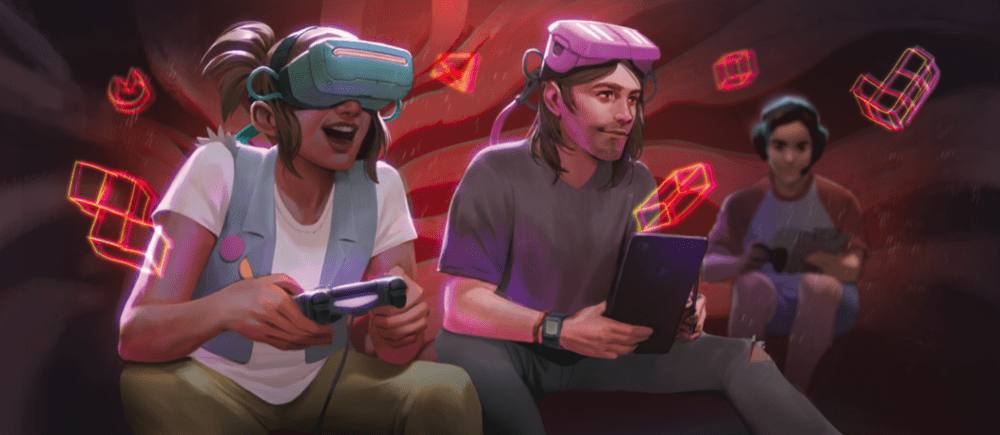
Virtual Reality (VR) has revolutionised the gaming industry, offering players an unparalleled level of immersion. However, creating a seamless, bug-free VR experience is far more complex than traditional game development. Even the tiniest glitch—a frame drop, a tracking error, or a misaligned object—can shatter immersion and cause discomfort or motion sickness. This is why VR game testing is absolutely essential.
This comprehensive guide explores why VR game testing is crucial for delivering a great gaming experience in 2026, the unique challenges it presents, and best practices for ensuring quality.
For a broader view of game testing, read our guide on 6 Things You Require to Concentrate On Video Game Testing.
The Growing VR Market: Why Testing Matters More Than Ever
The VR market has grown exponentially. While exact projections vary, the demand for high-quality VR content is undeniable, driven by advancements in head-mounted displays (HMDs), increasing affordability, and the expansion of VR into sectors beyond gaming, such as healthcare, manufacturing, and remote work.
Key drivers of VR market growth:
- Gaming and Entertainment: The primary driver, with users seeking more immersive experiences.
- Enterprise Applications: VR is used for training, simulation, and remote collaboration.
- Healthcare: VR is used for therapy, surgical training, and patient education.
- Marketing: Brands use VR to create immersive product experiences.
For more on market trends, read Software Testing Trends: What’s Shaping the Future of QA.
The Unique Challenges of VR Game Testing
Testing VR games is fundamentally different from testing traditional 2D or 3D games. The immersive nature of VR introduces unique challenges that require specialised QA approaches.
1. Immersion and Presence
- Challenge: Any glitch—frame drops, tracking errors, or visual artifacts—can break immersion.
- Testing Focus: Ensure smooth frame rates, accurate tracking, and seamless interactions.
2. Motion Sickness and Discomfort
- Challenge: Poorly optimised VR experiences can cause motion sickness, eye strain, and headaches.
- Testing Focus: Test for latency, frame rate consistency, and comfort settings.
3. Hardware Compatibility
- Challenge: VR experiences must work across various HMDs, controllers, and hardware configurations.
- Testing Focus: Extensive compatibility testing across devices and platforms.
4. Real-World Environment Simulation
- Challenge: VR experiences must work in different physical spaces and lighting conditions.
- Testing Focus: Test in various environments to ensure robustness.
5. User Interaction and Controls
- Challenge: VR interactions (gestures, hand tracking, voice commands) are more complex than traditional inputs.
- Testing Focus: Validate all interaction methods for accuracy and responsiveness.
For more on usability, read The Absolute Necessity of UX Testing: Best Practices, Tools & Methodology.
Key Types of VR Game Testing
| Test Type | Description | Focus |
|---|---|---|
| Functional Testing | Validates core gameplay mechanics and features. | Game logic, interactions, UI, menus. |
| Performance Testing | Ensures smooth frame rates and low latency. | Frame rate, latency, resource usage. |
| Compatibility Testing | Tests across various hardware and software configurations. | HMDs, controllers, OS versions, GPUs. |
| Usability Testing | Evaluates user experience and comfort. | Motion sickness, intuitiveness, controls. |
| Security Testing | Identifies vulnerabilities and ensures data protection. | User data, payment gateways, network security. |
| Accessibility Testing | Ensures the game is accessible to players with disabilities. | Colour contrast, subtitles, alternative controls. |
For a practical guide on performance, read Performance Testing: What It Is, Common Issues, and Why It Matters.
VR Game Testing Best Practices (2026)
1. Start Early and Test Continuously
Integrate QA from the earliest stages of development. Use a shift-left approach to catch issues early.
2. Test on Real Hardware
Emulators cannot replicate the nuances of real VR hardware. Always test on actual HMDs and controllers.
3. Focus on Performance
Ensure consistent frame rates (90+ FPS) and low latency. Use performance monitoring tools.
4. Test in Realistic Environments
Simulate real-world conditions—lighting, physical space, and network conditions.
5. Prioritise Usability and Comfort
Test for motion sickness, comfort settings, and intuitive controls. Gather user feedback.
6. Automate Where Possible
Automate regression and performance tests to speed up the QA process.
7. Collaborate with Developers
QA and development teams should work closely to resolve issues quickly.
For more on automation, read 7 Tips for Developing the Ultimate Test Automation Strategy.
A Case Study: TestUnity’s VR Game Testing Success
Client: A leading consumer electronics and entertainment corporation, one of the world’s leading VR platforms, offering VR video content and gaming experiences to millions of users.
Challenge: The client needed to ensure their VR gaming platform was bug-free and market-ready, with a seamless immersive experience across multiple platform combinations.
Solution:
- TestUnity acted as the “Quality Gateway,” verifying the usability and performance of gaming content across 40+ platform combinations.
- Leveraged an in-house state-of-the-art lab in a DevOps setting for performance benchmarking, functional testing, and test automation.
- Conducted platform compatibility testing to ensure the VR application fit various OS versions and software/hardware configurations.
Results:
- Successful launch of a robust, scalable VR gaming platform.
- Significant growth in the client’s customer base, often called the “Netflix of VR content.”
- Increased trust and confidence, leading to a mammoth platform certification exercise with 200+ video gaming titles across 40+ platform combinations for a future release.
For more on TestUnity’s approach to testing, read All You Need to Know about PlayTesting.
How TestUnity Helps with VR Game Testing
At TestUnity, we specialise in comprehensive VR game testing services to ensure immersive, bug-free gaming experiences. Our services include:
- Functional and Performance Testing: Validating gameplay mechanics and ensuring smooth performance.
- Compatibility Testing: Testing across a wide range of HMDs, controllers, and platforms.
- Usability and Comfort Testing: Ensuring user comfort and intuitive controls.
- Security and Compliance Testing: Protecting user data and ensuring compliance.
- Test Automation: Automating regression and performance tests for faster delivery.
We help you deliver exceptional VR gaming experiences that captivate and retain players.
Conclusion
VR game testing is essential for delivering immersive, bug-free gaming experiences. With the VR market growing rapidly, the demand for high-quality, tested content will only increase. By understanding the unique challenges, adopting best practices, and leveraging specialised QA services, you can ensure your VR games stand out in a competitive market.
Key takeaways:
- VR game testing is crucial for immersion, performance, and user comfort.
- Unique challenges include motion sickness, hardware compatibility, and real-world simulation.
- Best practices include early testing, real hardware, and a focus on usability.
- TestUnity provides comprehensive VR game testing services.
Ready to elevate your VR gaming experience? Contact TestUnity today to discuss how our VR game testing experts can help you deliver a seamless, immersive experience.
Related Resources
- 6 Things You Require to Concentrate On Video Game Testing – Read more
- All You Need to Know about PlayTesting – Read more
- The Future of Game Automation Testing – Read more
- The Absolute Necessity of UX Testing: Best Practices, Tools & Methodology – Read more
- Performance Testing: What It Is, Common Issues, and Why It Matters – Read more

TestUnity is a leading software testing company dedicated to delivering exceptional quality assurance services to businesses worldwide. With a focus on innovation and excellence, we specialize in functional, automation, performance, and cybersecurity testing. Our expertise spans across industries, ensuring your applications are secure, reliable, and user-friendly. At TestUnity, we leverage the latest tools and methodologies, including AI-driven testing and accessibility compliance, to help you achieve seamless software delivery. Partner with us to stay ahead in the dynamic world of technology with tailored QA solutions.







Leave a Reply