
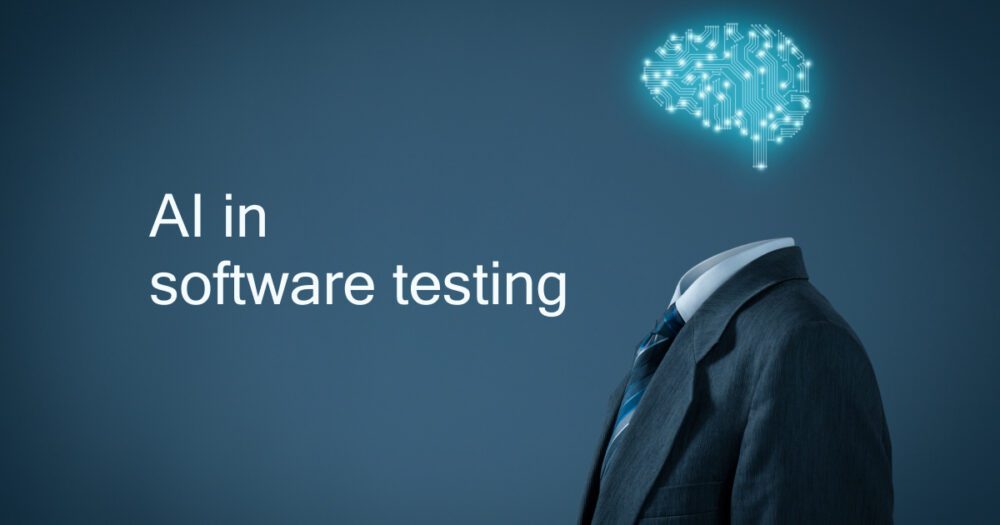
The pressure to deliver high-quality software at an unprecedented pace has fundamentally changed the role of testing. It is no longer a final gate but a continuous, integrated process that must keep up with agile development and rapid release cycles. In this demanding environment, artificial intelligence (AI) has moved from a promising novelty to a core strategic asset for quality assurance (QA). The integration of AI in software testing is not about replacing human testers; it’s about empowering them to overcome traditional limitations and focus on higher-value activities.
This guide explores the five most impactful benefits of adopting AI-driven testing, moving beyond basic automation to achieve intelligent, predictive, and highly efficient quality engineering.
1. From Scripted to Intelligent: Unleashing Enhanced Test Automation
Traditional test automation follows rigid, scripted instructions. While powerful, it struggles with dynamic applications and requires constant maintenance. AI-powered test automation introduces adaptability and intelligence.
- Self-Healing Test Scripts: One of the biggest costs in test automation is maintenance. When a button’s ID changes or a CSS class is updated, traditional scripts break. AI-enabled tools can automatically detect these changes in the application’s UI and update the object locators in the scripts, often without human intervention. This “self-healing” capability drastically reduces maintenance overhead and keeps your test suite reliable.
- Intelligent Test Generation: AI can analyze the application under test, including its user flows, codebase, and historical defect data, to automatically generate test cases. It can identify high-risk areas and edge cases that humans might miss, ensuring broader coverage from the start. This is a cornerstone of modern AI-based test generation strategies.
- Smarter Execution: AI can optimize test execution by prioritizing tests based on risk, recent code changes, or past failure rates. This ensures that the most critical tests run first, providing faster feedback to developers.
2. Achieving Unprecedented Accuracy and Consistency
Human testers are invaluable for their creativity and intuition, but manual testing is inherently prone to error, especially during repetitive tasks. AI brings machine-level precision to the QA process.
- Elimination of Human Fatigue Errors: Tasks like data entry for test scenarios, regression testing across multiple builds, or validating large datasets are perfectly suited for AI. Machines do not get tired or lose focus, ensuring every test is executed with the same level of attention and accuracy.
- Detailed and Unbiased Results: AI testing tools provide objective, data-rich reports. They log every action, outcome, and system state without the subjective interpretation that can sometimes color human reports. This leads to clearer, more actionable bug reports and reduces time spent on triage and clarification.
- Enhanced Visual Validation: Using computer vision and image recognition, AI can perform pixel-perfect visual testing. It can detect subtle UI glitches, rendering issues across browsers and devices, or layout shifts that might escape a human eye, ensuring a consistent user experience. This capability is transforming functional testing by adding a robust visual layer.
3. Expanding Test Coverage to Mitigate Hidden Risks
A common challenge in QA is the practical limit of test coverage. There are simply too many combinations of devices, operating systems, user inputs, and states to test manually or even with traditional automation.
- Exploring the Unscripted: AI techniques like machine learning can be used to create models that explore the application dynamically. These tools can “crawl” the app, interacting with elements in countless combinations to uncover paths, states, and potential crashes that were not explicitly scripted, dramatically increasing coverage depth.
- Data and State-Aware Testing: AI can peer into file contents, memory usage, data tables, and internal program states during test execution. This allows it to verify not just that the UI reacted correctly, but that the underlying data and business logic are sound—a significant step beyond surface-level testing.
- Scalability Across Environments: With AI-driven orchestration, teams can easily scale their test execution to cover thousands of device-browser-OS combinations in parallel using cloud-based labs. This makes comprehensive cross-browser and cross-platform testing a practical reality rather than an aspirational goal.
4. Accelerating Release Velocity and Time-to-Market
In a competitive landscape, speed is a feature. AI compresses testing cycles, enabling true continuous testing and faster release cadences without sacrificing quality.
- Exponential Reduction in Execution Time: AI-optimized test suites can run in a fraction of the time required for manual execution. What takes a human team days or weeks can be completed in hours. This allows for testing to be integrated into every stage of the CI/CD pipeline, providing immediate feedback on every commit.
- Faster Root Cause Analysis: When a test fails, AI can assist in root cause analysis by correlating the failure with specific code changes, environmental factors, or similar historical defects. This helps developers pinpoint and fix issues much faster, reducing the “debugging drag” on the development cycle.
- Enabling Shift-Left and Shift-Right: AI facilitates shift-left testing by allowing developers to run intelligent unit and integration tests as they code. It also powers shift-right testing by monitoring production applications, analyzing user behavior logs to detect anomalies, and predicting where failures might occur, creating a continuous quality loop.
5. Transforming Test Maintenance from a Burden to a Strategic Advantage
Test maintenance is often the most resource-intensive part of an automation program. AI flips this model, making the test suite a resilient and adaptive asset.
- Predictive Analytics for Proactive Care: AI can analyze patterns in test failures, code churn, and defect history to predict which parts of the application and which test cases are most likely to cause problems in the next sprint or release. This allows teams to focus their pre-emptive testing and refactoring efforts where it matters most.
- Optimized Test Suite Management: Over time, test suites can become bloated with redundant, flaky, or low-value tests. AI can analyze test effectiveness and coverage to recommend which tests to keep, merge, or remove. This keeps the suite lean, fast, and relevant, directly contributing to efficient DevOps practices.
- Automatic Flakiness Detection: AI can identify tests that exhibit flaky behavior (passing and failing intermittently without code changes) and either flag them for repair or provide insights into the environmental or timing issues causing the instability.
| Traditional Testing Challenge | AI-Enhanced Solution | Strategic Outcome |
|---|---|---|
| High test script maintenance costs | Self-healing locators & change impact analysis | Reduced overhead, resilient automation assets |
| Limited, scripted test coverage | Intelligent test generation & exploratory AI | Broader risk mitigation, discovery of unknown issues |
| Slow test execution & feedback loops | Parallel, optimized execution & smart analytics | Faster release cycles, integrated continuous testing |
| Manual, repetitive visual validation | Pixel-perfect AI visual testing & pattern recognition | Consistent UX, reduced visual regression bugs |
| Reactive bug detection | Predictive analytics & production monitoring | Proactive quality management, higher user satisfaction |
Conclusion: The Future of QA is Intelligent
The benefits of AI in software testing are clear: it elevates QA from a cost center to a strategic driver of quality, speed, and innovation. By delegating repetitive, high-volume tasks to machines, QA engineers and developers are freed to focus on complex test scenario design, usability, security, and strategic quality initiatives.
The integration of AI is a fundamental shift, aligning perfectly with the broader future of test automation. It represents the move from automated testing to intelligent testing—where the system not only executes checks but also helps decide what to check, learns from experience, and adapts to change.
Ready to harness the power of intelligent testing for your organization? TestUnity’s expertise in AI-driven testing solutions can help you build a smarter, faster, and more robust quality assurance practice. From AI-based test generation to integrating intelligent tools into your CI/CD pipeline, we provide the strategy and execution to transform your testing.
Explore our AI and machine learning testing services or contact a TestUnity expert today to start building your intelligent testing strategy.

TestUnity is a leading software testing company dedicated to delivering exceptional quality assurance services to businesses worldwide. With a focus on innovation and excellence, we specialize in functional, automation, performance, and cybersecurity testing. Our expertise spans across industries, ensuring your applications are secure, reliable, and user-friendly. At TestUnity, we leverage the latest tools and methodologies, including AI-driven testing and accessibility compliance, to help you achieve seamless software delivery. Partner with us to stay ahead in the dynamic world of technology with tailored QA solutions.





Leave a Reply