
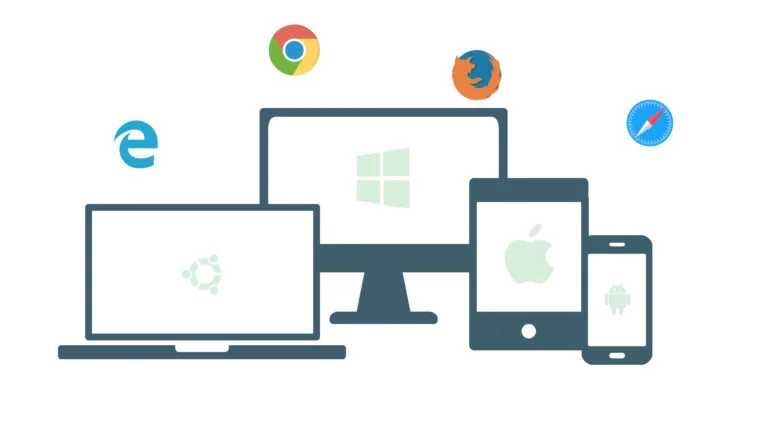
Are you searching for reliable cross-browser testing tools to ensure your web and mobile apps work flawlessly across all browsers? Your search ends here. In this comprehensive guide, we’ll explore the top 10 cross-browser testing tools that will help you deliver a consistent user experience, regardless of the browser your visitors use.
What Is Cross-Browser Testing?
Cross-browser testing is a quality assurance process that evaluates web and mobile applications across multiple browsers, operating systems, devices, and screen resolutions. It ensures your website’s functionality, design, and performance remain consistent no matter how users access it.
With countless browser versions, OS combinations, and device types in the market, cross-browser testing has become an essential practice for modern web development. After investing significant resources in website and application development, it would be wasteful if your application doesn’t run smoothly across different browsers.
The 10 Most Efficient Cross-Browser Testing Tools
1. TestingBot
TestingBot offers cross-browser testing on over 3,200 browser and device combinations, including support for ChromeOS and Electron applications. You can manually test web and mobile apps by taking control of real browsers and devices directly from your own browser. For automated testing, TestingBot supports high-concurrency execution with frameworks like Selenium, Cypress, Playwright, and Puppeteer.
Key Features:
- Supports over 3,200 physical devices and browsers
- Headless testing, performance testing, real devices, visual testing, and codeless automation
- Compatible with Selenium, Playwright, Cypress, and Puppeteer
- Integrates with Azure, Jenkins, Jira, DevOps, Bamboo, and more
Benefits:
- 100% compatible Selenium/Appium grid
- Excellent support and documentation
- High-concurrency test execution for faster suites
2. LambdaTest
LambdaTest is a leading cross-browser testing platform that enables developers and testers to perform manual and automated tests at scale across 10,000+ browsers, real devices, and OS environments. It supports Selenium, Appium, Playwright, and all major frameworks.
Key Features:
- Online browser compatibility testing
- Seamless collaboration and testing
- Test locally hosted pages
- Fast automated screenshot testing
- Built-in DevTools and network throttling
Benefits:
- Free trial available
- Supports Chromium, Firefox, Brave, and DuckDuckGo on iOS simulators
- Chrome extension for faster test execution
3. TestComplete (SmartBear)
TestComplete is an automated UI testing tool that allows you to create tests using a single browser and run them in parallel across 1,500+ remote test environments, including various browsers, operating systems, resolutions, and devices. It integrates seamlessly with SmartBear’s device cloud for expanded coverage.
Key Features:
- Develop, maintain, and execute functional tests across web, desktop, and mobile applications
- Parallel execution across 1,500+ real testing environments
- Create one automated GUI test for multiple browsers
- Record tests in one browser and run them in others
Benefits:
- Real-time access to latest browsers, resolutions, devices, and operating systems
- Built-in integration with CrossBrowserTesting cloud service
- Scales cross-browser tests to the cloud for immediate ROI
4. CrossBrowserTesting (SmartBear)
CrossBrowserTesting provides a user-friendly platform for performing cross-browser testing on over 2,050 desktop browsers and real mobile devices across Android, macOS, iOS, Windows, and Ubuntu. It’s an all-in-one UI functional web testing platform that allows teams to automate Selenium scripts, manually debug web applications, and visually compare sites on over 1,500 real desktop and mobile browsers in the cloud.
Key Features:
- Visual, manual, and Selenium tests on 2,050+ desktop browsers and real mobile devices
- Intuitive API for accessing almost every app
- Full access to tools and extensions like Firebug and Chrome DevTools
- Record & Replay functionality for quick test creation
Benefits:
- Ideal for quick testing
- Free trial version available
- Choose screen resolution and operating system
- Integrates with Zephyr for Jira and BitBar for wider testing coverage
5. QA Wolf
QA Wolf is a modern testing platform designed for the entire team. It prioritizes ease of use, allowing users to create tests directly in their browser and collaborate in real-time. The platform’s Automation AI writes production-grade code for complex web, iOS, and Android test cases, helping engineering teams achieve 80% automated end-to-end test coverage quickly.
Key Features:
- No installation or setup required
- No programming language learning or boilerplate code needed
- Fix tests by adjusting just a line or two of code
- Unlimited, parallel test runs on QA Wolf infrastructure
- Zero flake guarantee
Benefits:
- Fast test results delivery
- Real-time collaboration via shareable links
- Re-run and fix tests directly from browsers
- Equivalent testing capacity of 4-5 additional QA engineers
6. Sauce Labs
Sauce Labs is a cloud-based platform for testing web and mobile applications, providing instant access to thousands of operating system and browser combinations, mobile emulators, simulators, and real devices. It supports live cross-browser testing on both virtual and real mobile devices for Android and iOS.
Key Features:
- Supports Chrome, macOS, Firefox, Safari, iOS, Linux, and Android
- Test on real and virtual devices
- Seamless development integration
- Parallel testing optimized for CI/CD pipelines
- Live testing with DevTools for iOS and Android
Benefits:
- Test mobile browsers on real devices
- Wide selection of real devices, emulators, and simulators
- Compatible with any programming language and integrates with CI systems for automated build processes
- Identify failure patterns and improve build efficiency with Insights
7. Katalon Studio
Katalon Studio is a popular Selenium and Appium alternative used by over 850,000 testers. It offers scalable web, mobile, and desktop testing with built-in CI/CD integration. The platform supports cross-browser testing across Chrome, Firefox, Edge, Safari, and Internet Explorer, with the ability to run tests on 5,000+ browser and device combinations through integrations with cloud testing providers.
Key Features:
- Compatible with latest Chrome, Edge, and Firefox versions
- Flexible test migration from Selenium
- Built-in CI/CD integration
- Codeless automation script creation with powerful record and playback
- Supports test data from Excel, CSV, databases, or JSON
Benefits:
- Fast feedback on performance
- Self-healing mechanism to adapt to UI and code changes
- Parallel test execution on hosted browsers and mobile devices in the cloud
- Visual testing and mobile live testing support
8. Browsershots
Browsershots is a free, open-source online tool that creates screenshots of your web design across different operating systems and browsers. It provides developers with a convenient way to test browser compatibility without any software installation.
Key Features:
- Widely used compatibility testing browser tool
- Supports over 200 browser versions
- Great customization options (screen size, color depth, JavaScript support)
- Handles navigation testing and scripting easily
Benefits:
- Supports 200+ different browser versions
- Great customization options
- Free browser compatibility test
- No installation required, accessible from any machine with internet connection
9. BrowserStack Live
BrowserStack Live is a cloud-based testing infrastructure that enables development teams to validate web applications across thousands of real browser and device combinations without maintaining physical testing labs. It offers both manual testing (Live) and automated testing (Automate) capabilities.
Key Features:
- No setup required; start instant testing on real cloud devices
- Covers 3,500+ desktop browsers and all real mobile device browsers
- Secure and private network with local testing capabilities
- Multi-device testing on up to four real devices or browsers simultaneously
- Real-time debugging with built-in DevTools and bug reporting
Benefits:
- Supports almost every real mobile device browser
- Instant testing on real cloud devices
- No device lab or virtual machines needed
- Geolocation testing to verify application performance from different geographic regions
10. Selenium Grid
Selenium Grid is part of the Selenium Suite that allows you to run your tests on different machines against different browsers. It enables running multiple tests in parallel across different browsers, operating systems, and machines, enhancing test coverage and accelerating the testing process.
Key Features:
- On-premise/corporate cloud deployment for security-sensitive industries
- Runs on real devices, desktop browsers, and emulators/simulators
- Supports Chrome, Safari, Edge, Firefox, and Internet Explorer
- Parallel test execution across multiple configurations
Benefits:
- Secure tool requiring no tunnels or external access
- Maintenance-free operation
- Dynamic scaling up and down with container-based solutions like Docker Selenium
- Supports various programming languages, reducing the learning curve
How to Choose the Right Cross-Browser Testing Tool
When selecting a cross-browser testing tool, consider the following factors:
- Browser and Device Coverage – Ensure the tool supports the browsers, operating systems, and devices your users rely on.
- Manual vs. Automated Testing – Determine whether you need manual testing, automated testing, or both.
- Integration Capabilities – Look for tools that integrate with your existing CI/CD pipeline, test frameworks, and project management tools.
- Budget – Compare pricing models, including free trials, pay-as-you-go, and enterprise plans.
- Ease of Use – Consider the learning curve and whether the tool offers codeless options for non-technical team members.
- Security and Compliance – For security-sensitive industries, consider on-premise deployment options like Selenium Grid.
Conclusion
Cross-browser testing is essential for ensuring your web and mobile applications function flawlessly across all browsers and devices. The 10 tools listed above represent the most efficient solutions available in 2026, each with unique strengths and capabilities. Whether you need cloud-based testing, on-premise security, codeless automation, or AI-powered test generation, there’s a tool that fits your requirements.
At TestUnity, we provide high-quality web and mobile application development and testing services globally. If you need assistance with cross-browser testing or want to develop your web or mobile application, contact us today. Our dedicated developers will deliver the highest quality service at a cost-effective price.
*Note: The original publication date of this article was 2022, but the content has been updated to reflect the latest features and capabilities of cross-browser testing tools in 2026.*
Related Resources
- How to Conduct Cross-Browser Testing Using Selenium WebDriver
- Top 5 UI Performance Testing Tools
- Top Software Testing Trends Shaping the Future of QA

TestUnity is a leading software testing company dedicated to delivering exceptional quality assurance services to businesses worldwide. With a focus on innovation and excellence, we specialize in functional, automation, performance, and cybersecurity testing. Our expertise spans across industries, ensuring your applications are secure, reliable, and user-friendly. At TestUnity, we leverage the latest tools and methodologies, including AI-driven testing and accessibility compliance, to help you achieve seamless software delivery. Partner with us to stay ahead in the dynamic world of technology with tailored QA solutions.



Leave a Reply